

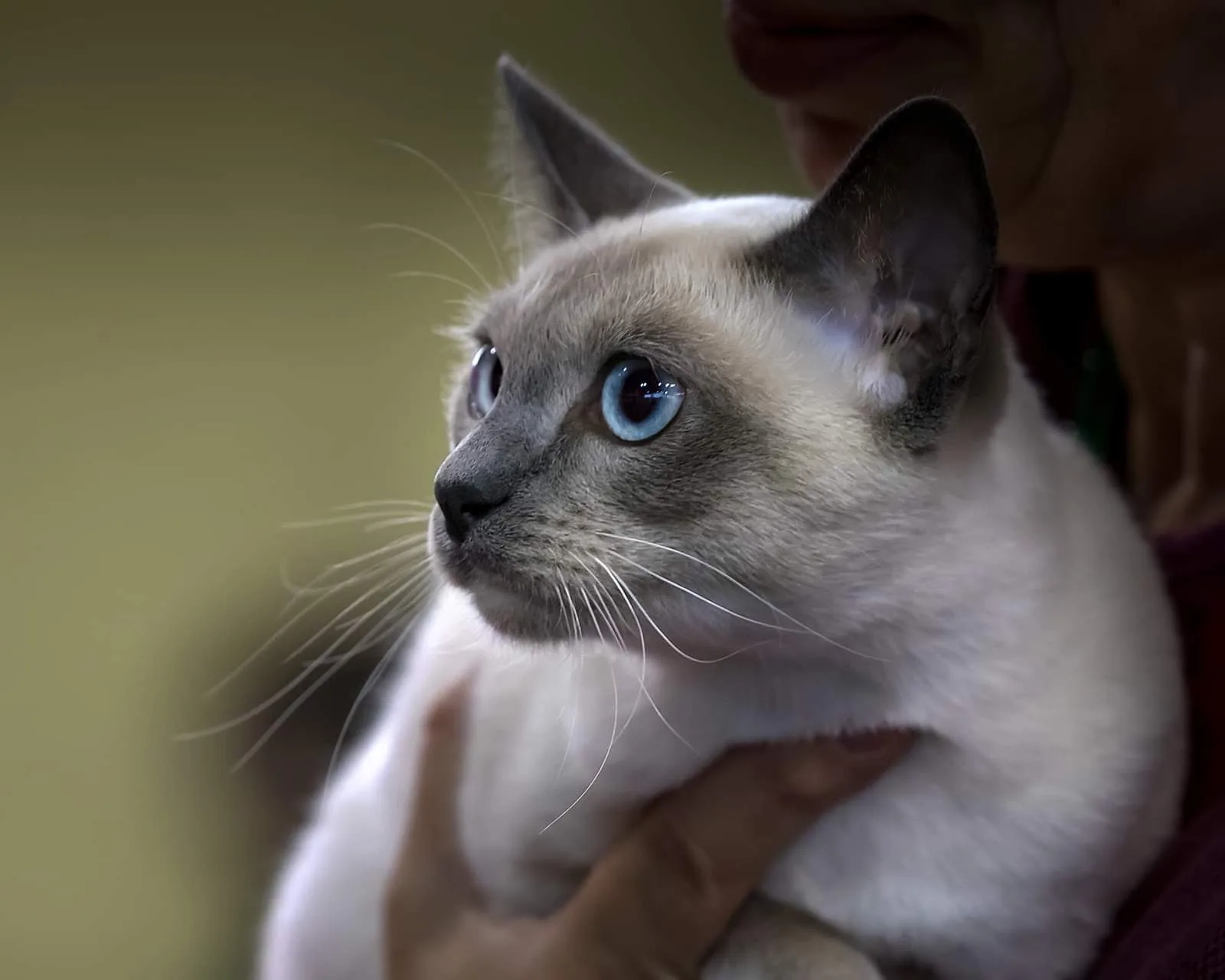
The breedTonkinese cat
Character
The Tonkinese’s personality makes this breed popular as a companion cat. Loving, sociable, active, playful... yet content to be a lap cat, Tonkinese strongly believe that humans were put on Earth to love them. Intelligent and generous in their affections, Tonkinese will curiously monitor all your activities.
The Tonkinese cat has a natural talent for inventing games, using favorite toys for fetch or playing hide-and-seek with other animals and even people. Tonkinese kittens love to play, but even adult cats enjoy playing throughout their lives. These playful cats greatly appreciate scratching posts, climbing, and a variety of toys. A Tonk will quickly take over your home and life! He will quickly gain the respect of family and guests, becoming the first to greet and entertain guests at the door.
A Tonk gets along well with children, other cat breeds, and dogs. He prefers not to be ignored or left alone. Two Tonks will keep each other company and reduce the amount of trouble a single bored Tonk can get into. It’s also very entertaining to watch two kittens play together.
Are they talkative? That depends on your perspective. When they have something to say, they speak in sentences and paragraphs (not just to hear themselves speak). Their vocalizations have a purpose and expect a response. A wise owner will listen to a Tonk… otherwise, the cat might find an alternative way to express itself :-)
Appearance and colors
Tonkinese are beautiful, medium-sized cats, surprisingly heavy and muscular. Their fur is short, soft, and silky, easy to care for, and wonderful to pet!
The Tonkinese comes in 12 color and pattern varieties. The outermost colors (mask, ears, and tail) are called “points”. Coat patterns refer to the contrast between the body color and the points. The four basic colors are lilac (platinum), chocolate (champagne), natural (seal), and blue. The three coat patterns are: point, which is characterized by high contrast between the markings and the body and typically has blue eyes; mink, which has medium contrast and aquamarine eyes; and sepia (solid), which has low contrast between the body and limbs and eyes ranging from green to yellow-green.
History of the breed
Although a new breed in the 1980s, it was the same breed featured in the “Siamese Poems of the Ayudha Period” (1358–1767) and imported to England in the early 19th century as the “Chocolate Siamese”. In the United States, Tonkinese and Burmese cats descend from Wong Mau, a small walnut-colored cat imported to California by Dr. Joseph Thompson in 1930.
The Tonkinese we know today developed in the 1960s and 1970s from Siamese and Burmese cats. Breeders desired a breed more balanced than the extremes of the two parent breeds and desired new “mink” colors with aqua eyes. The Tonkinese was the first pedigree cat with aqua eyes. The breed was first recognized in Canada and subsequently accepted for championship status by the CFA in 1984. At that time, further crossbreeding with Siamese and Burmese cats ceased.
Choosing a kitten and caring for it
Choosing a new kitten is an important decision for the entire family. It’s a lifelong commitment. Kittens need time before 14 weeks to learn good habits from their mother and littermates; this gives them the necessary socialization and confidence to move to a new home. This is also the time for basic vaccinations and neutering.
Caring for a Tonkinese kitten is relatively easy. You can use a rubber brush to remove shedding fur, and they can also be bathed occasionally.
Tonkinese consider everyone their friend and lack defensive abilities, so they are strictly indoor cats. With a young kitten, it is wise to kitten-proof the home, as you would for a two-year-old child.
Materials used from cfa.org/tonkinese.